
Interdisciplinary, practical study for a better world. Learn more about the books below.
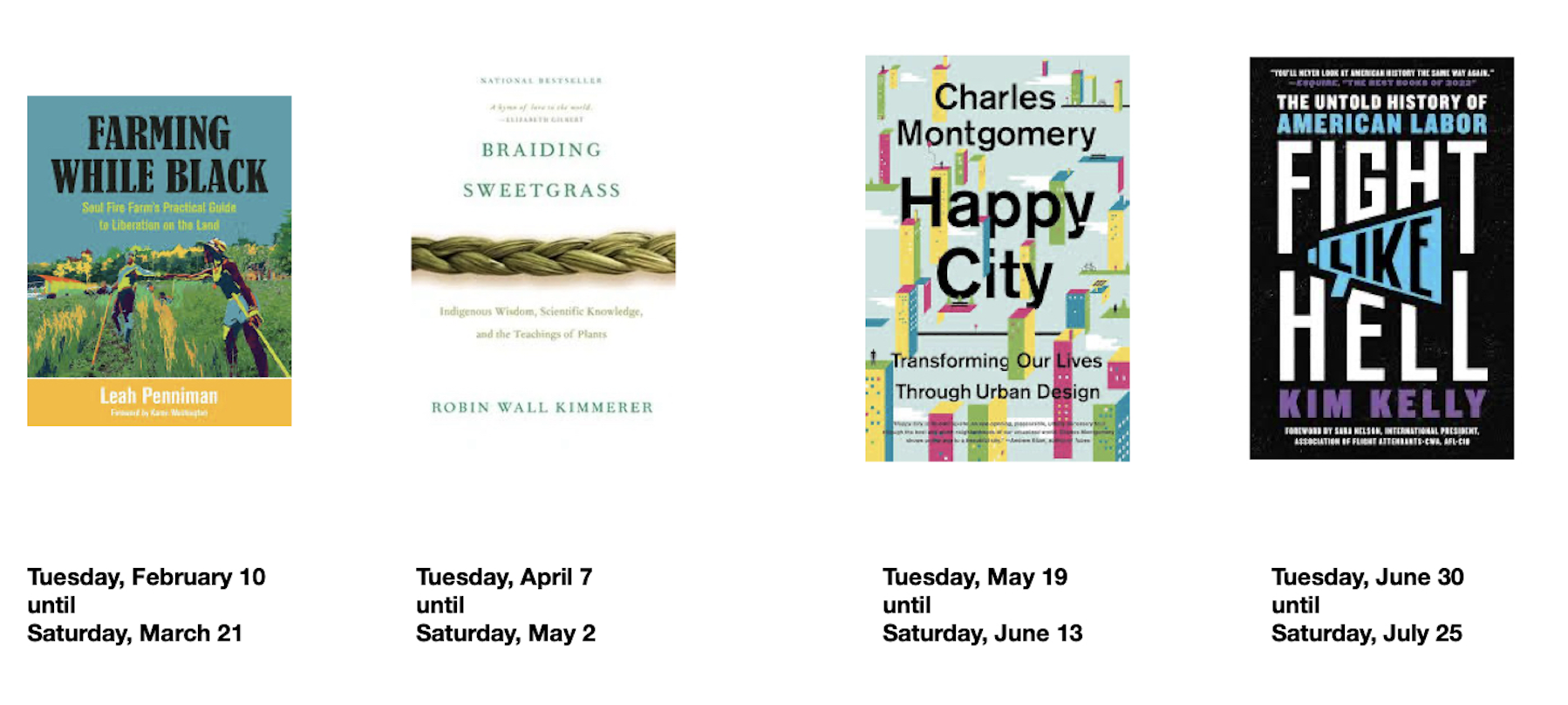
Farming While Black
A manual for using farming and gardening to disrupt harmful sociopolitical agendas in both rural and urban environments, yes. And this text is also, (and just as importantly) steeped in the sort of heart-pulled longing for wholeness and reconnection to parts of our story that have been taken from us (as Black people and human beings) — the kind of longing that sustains tough movements. The author guides us on how to grow food and community while incorporating the cultural land-reverence practices many of our ancestors knew intimately.
As we begin to orient ourselves to this learning journey, it felt important to set ourselves up with a text that can serve as a practical game plan heading into the warmer months ready to support or start growing initiatives. Whether you get a chance to volunteer here and there with a garden in your community, or foster a nourishing grow space in your home, or move toward larger land movements, Farming While Black will serve as a tool you can revisit time and time again because of the way it grounds concepts and big visions into practical action on large and tiny scales.
Our reading and gathering style will be active and exploratory, with annotation and personal connection to the material encouraged throughout our sessions.
My big intention is two-fold (1) make this practical manual as accessible as possible and (2) to pull out some of the most salient guidance for ecological relationships and how we fit into them.
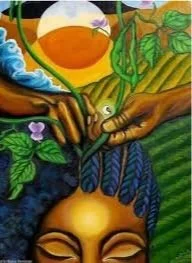

2. Braiding Sweetgrass
Braiding Sweetgrass is a sweet and slight curve of a turn toward the subtle intelligence, beauty, and power in the natural world around us. It is also an uplifting of indigenous ways of relating to this very land we live on, (“Turtle Island” (USA)). Here author Robin Wall Kimmerer weaves both her indigenous beingness and worldview together with her scientific expertise as a botanist as she profiles different ecological relationships in each chapter. The third strand, if I am to keep with the braiding analogy :), is the personal stories she also weaves into the chapters.
For me, this book brings up the words “delight” and “warning”. It is truly enjoyable to read, fitting into an early morning routine to stave off the desire to grab the phone or ground ourselves before we get into what needs to happen, or a quiet moment between work tasks, or a nice send off before bed. It also gives me the sense of what could be and what must be but is so direly endangered by our current way of doing things.
Our reading style will take a more wondering and wandering approach for this book with contemplation and real life connections encouraged in the worksheets and reading companions provided. My big intentions here are to ground you in a more alive, holistic, and delightful way of walking about the world and to segue us into visioning our futures with the next book.
3. Happy City
The visioning goes up a notch with our third selection, Happy City. Here, author Charles Montgomery combines urban design and the scientific exploration of happiness to bring us case studies of initiatives and projects around the world aimed at designing environments that actually serve human wellbeing. Here even when ecology is not explicitly stated, it will be rich to explore the efforts people have made and are making toward happier environments with the ecological lens we have been developing with the previous two books.
This book, like Braiding Sweetgrass, allows you to enter a new world with each chapter. Also like Braiding Sweetgrass it has been described as a text that changes the way you see, experience, and feel the places you inhabit.
My big intention with this text is to expand past the organic world into the constructed world to start to earnestly answer the all-too-common refrain many of us are hearing which is “Why isn’t anyone doing anything?” With this text we shake off that delusion by studying what people are doing and have been doing and orient ourselves into how we too can foster a “doers” approach past a critic’s approach.
This book I have not previously read so the reading style might take on a more book club style, but still with the supportive reading resources.

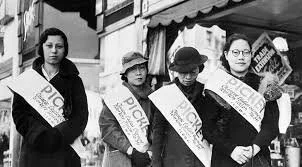
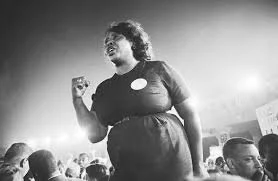
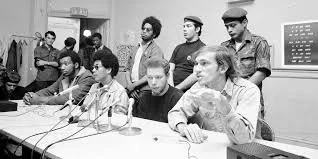
4. Fight Like Hell
Finally, when we reach Fight Like Hell, we will have garnered all that grounded and visionary knowledge, all that focus on the environments around us, and we will round out our journey with snapshots of our labor history. Labor, work, what we do to “earn” a living, this realm takes up the lion’s share of our conscious attention as working people. Shouldn’t we have a strong understanding of what this exchange really is, how we got here, where we are going with it?
Here author Kim Kelly highlights forgotten and purposefully distorted leaders and movement stories that explain how we have the labor protections we do have while providing us guidelines for securing more people-centered wins and frameworks
My big intention with this book is to get at the fundamentals of what labor even is, what is has been and what it can become in our specific experience as Americans. Secondly it is to again weave in that ecological perspective that allows for mutually beneficial relationships, balance, and yields abundance enough for all of the living beings existing here together - human and otherwise.
This learning journey/study group/book club was born out of a lot of love and a lot of commitment to not only understanding what has gone wrong but contributing to what will be our future.
I, transparently, will bring that sort of energy to the space. I am so excited to see what you, the participants, will bring, coming as you are with the only requirement being curiosity and willingness to contribute in whatever way you can.
I can’t wait to see you there.
— Erika